Tue Mar 17, 2026 | Updated 08:55 PM IST


For couples undergoing IVF, few moments are as reassuring as hearing that a “good-quality” embryo has been transferred. In vitro fertilisation (IVF) brings hope to millions of couples trying to conceive, but it can also be confusing when a “good” embryo does not result in pregnancy. To understand this better, we spoke to Dr Mohammed Ashraf C, Scientific Director & Head of Embryology, Milann - Fertility & Birthing Hospital, Bengaluru, for insights on why embryo quality alone cannot guarantee IVF success:
In IVF, embryos are graded based on their appearance under the microscope, including cell number, symmetry, fragmentation, and rate of development. “At the blastocyst stage, grading also considers the inner cell mass and trophectoderm quality. A high-grade embryo statistically has a better chance of implantation compared to a poor-grade one,” explains Dr Mohammed Ashraf. Even a visually perfect embryo may carry chromosomal abnormalities that prevent implantation or cause early miscarriage.
Three major elements determine success:
Chromosomal integrity
Uterine receptivity
Right timing
Each embryo should contain 46 chromosomes: 23 from the egg and 23 from the sperm. During early cell division, DNA must be accurately copied and equally distributed.
“If errors occur during this process, chromosomal abnormalities (aneuploidy) may arise. Chromosomal errors increase with maternal age and can originate from the egg, sperm, or both. Even visually perfect embryos may be genetically abnormal”, says Dr Mohammed Ashraf.
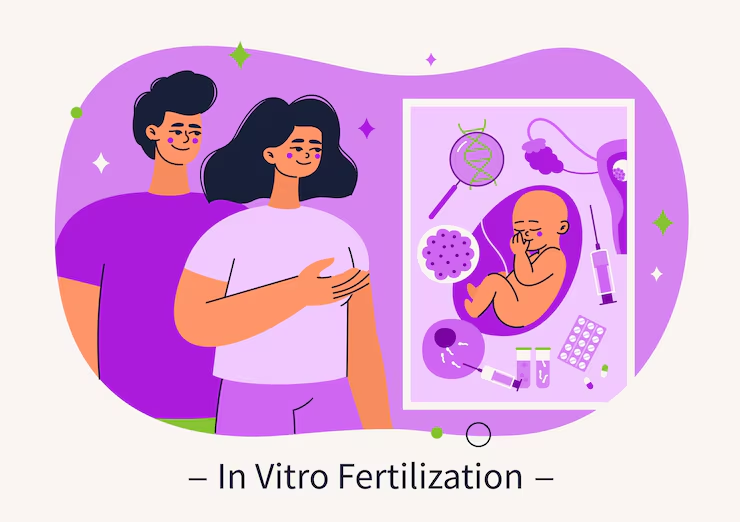
Preimplantation Genetic Testing (PGT) can identify embryos with the correct chromosomal number (euploid embryos), which have a significantly higher implantation potential. “PGT is individualised and recommended based on age, history, and clinical indications,” adds Dr Ashraf.
Implantation is a highly coordinated dialogue between the embryo and the endometrium. “Even the best embryo cannot implant if the uterine environment is not receptive,” explains Dr Ashraf.
Factors that may interfere include:
Thin endometrial lining
Fibroids or polyps
Intrauterine adhesions
Chronic endometrial inflammation
Altered blood flow
Hormonal imbalance, especially progesterone
ALSO READ- What are Fibroids? Does It Lead to Infertility, Expert Explains
“The ‘window of implantation’ is a brief, hormonally regulated period when the uterine lining is optimally prepared to accept an embryo,” says Dr Ashraf. If embryo transfer occurs too early or too late, implantation may fail, even if both embryo and uterus are otherwise healthy. Precision in hormonal preparation and synchronisation is therefore critical.
ALSO READ- Vaccinations For Women Before And During Pregnancy: Expert Explains
Reproductive success is also influenced by overall health. Thyroid disorders, uncontrolled diabetes, obesity, autoimmune conditions, and nutritional deficiencies can reduce implantation potential. Lifestyle factors such as smoking, excess alcohol, caffeine, and chronic stress also impact outcomes. “Optimising metabolic and hormonal health improves the environment in which implantation occurs. One of the most common reasons IVF cycles fail is chromosomal error during early embryonic DNA replication. This explains why multiple attempts are sometimes necessary”, notes Dr Mohammed Ashraf.
Successful fertility treatment goes beyond the embryo - it requires the perfect alignment of science, patience, timing, and personalised care.
For more such stories, stay tuned to HerZindagi.
Image credit: Freepik
Also watch this video
Herzindagi video
Our aim is to provide accurate, safe and expert verified information through our articles and social media handles. The remedies, advice and tips mentioned here are for general information only. Please consult your expert before trying any kind of health, beauty, life hacks or astrology related tips. For any feedback or complaint, contact us at [email protected].