Sun Mar 22, 2026 | Updated 11:45 AM IST HZ Awards 2026

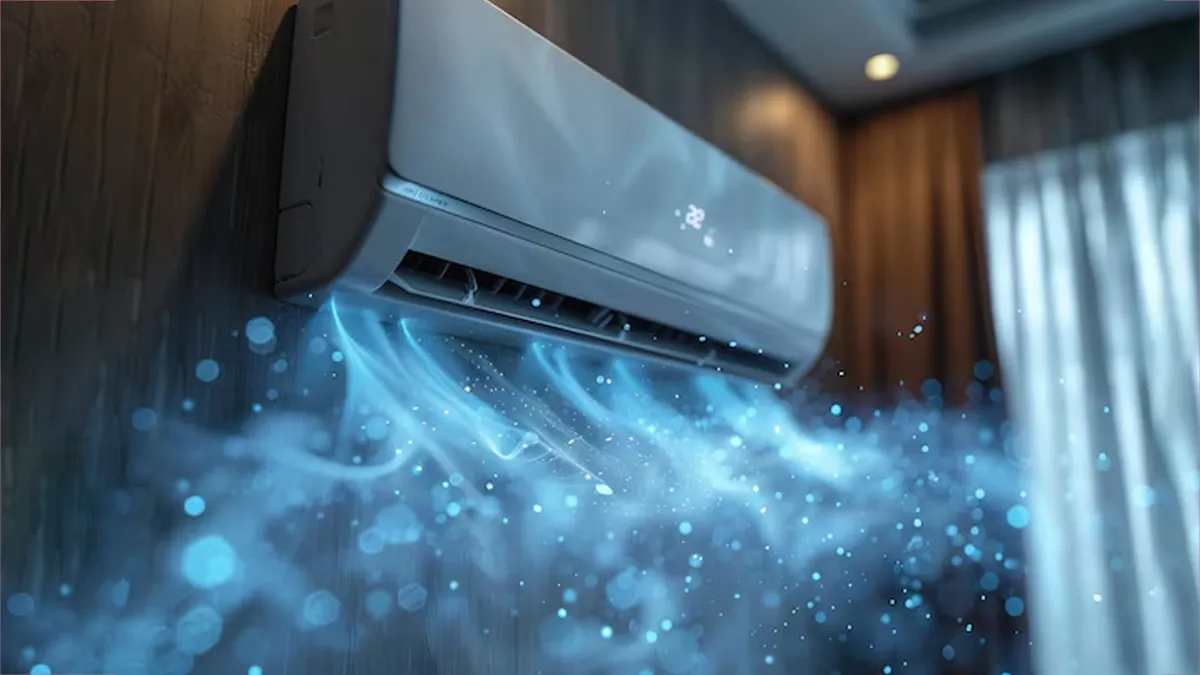
Most of us switch the air conditioner on without a second thought the moment the heat becomes unbearable. It is immediate relief, cool, still air in a sweltering room. What we rarely stop to consider is what that same air might be doing to our lungs, our throat, and our sinuses over time.
Dr Nilesh Sonawane, Consultant Pulmonologist at Apollo Clinic, Nigdi, Pune, has seen the consequences of poorly understood AC use play out in his clinic more times than he can count. The problems, he explains, are not dramatic or sudden in most cases. They creep in quietly, a persistent sore throat here, a worsening asthma episode there, until the pattern becomes impossible to ignore.

The first thing an air conditioning unit does is pull moisture out of the surrounding air. That is precisely how it cools a room. But that same dryness, Dr Sonawane warns, is where the trouble begins for many people.
"When the air loses its moisture, the natural protective lining inside your nose and throat dries out," he explains. "That lining is your first line of defence against viruses and irritants. Once it dries out, it loses its ability to trap and flush out harmful particles, which leaves you far more vulnerable to infection."
The result is familiar to anyone who sleeps in a heavily air-conditioned room regularly, a scratchy throat in the morning, mild irritation in the nasal passage, or that inexplicable feeling of having caught a cold without ever stepping outside.
For people already living with asthma, cold air from an air conditioning unit is a well-known and well-documented trigger. Dr Sonawane is direct about the mechanism, "Cold air almost always provokes bronchospasms in asthma patients. When cold air hits the bronchial tubes, they contract. For someone with healthy lungs, this is barely noticeable. For someone with asthma, it can bring on a full attack."
Bronchospasm, the sudden tightening of the muscles around the airways, causes the chest tightness, wheezing, and breathlessness that asthma sufferers know all too well. The fact that this can be triggered simply by sitting in an air-conditioned office or bedroom for several hours is something many patients do not realise until the connection is pointed out.

Beyond the cold and the dryness, there is another problem that Dr Sonawane regularly raises with his patients: recirculation. Air conditioning systems do not bring fresh air in from outside. They cycle the same indoor air around and around, and in doing so, they pick up and redistribute whatever is already present in that environment.
"Dust mites, pet dander, pollen that has drifted inside, all of it gets pulled through the system and pushed back out into the room," he says. "For people with allergic rhinitis or any kind of respiratory sensitivity, this constant recirculation of allergens makes symptoms significantly worse."
This is the reason someone might notice their eyes watering or their nose running not when they step outside, but when they sit indoors in a closed, air-conditioned space. The allergens are not coming in, they were already there, and the AC is simply ensuring they do not settle.
People who suffer from sinusitis often find that air conditioning sends their symptoms spiralling. Dr Sonawane explains why: "When the air is excessively dry, the body responds by producing more mucus in an attempt to compensate. For someone with sinusitis, that triggers a cycle of congestion, pressure, and discomfort that is very difficult to break whilst they remain in a dry, air-conditioned environment."
Setting the thermostat too low compounds this significantly. The colder and drier the air, the more aggressively the body tries to produce mucus, which leads to exactly the kind of sinus blockage and facial pressure that sinusitis sufferers dread.
His advice is straightforward: do not set the thermostat lower than necessary. A comfortable room temperature is not the same as the coldest the unit will go.
This is where Dr Sonawane becomes particularly emphatic. A dirty or poorly maintained air conditioning system does not just circulate stale air, it can become a breeding ground for genuinely dangerous biological contaminants.
"Mould grows inside AC units and ducts when moisture is trapped and filters are not cleaned regularly," he says. "Legionella bacteria, the kind responsible for Legionnaires' disease, a severe form of pneumonia, can multiply in poorly maintained systems and be dispersed through the air. These are not minor irritants. These are serious infections."
He also flags a less commonly discussed risk: buildings where loose or displaced AC units create gaps that allow birds, particularly pigeons, to roost nearby. Pigeon droppings carry bacteria and fungi, including those responsible for histoplasmosis, that can be extremely harmful when disturbed and inhaled.
The message is unambiguous. Cleaning the indoor filter regularly is not optional. Scheduling annual professional maintenance before the summer season begins is not something to keep deferring.
ALSO READ- 5 Health Conditions That Can Quietly Damage Your Kidneys
Dr Sonawane does not suggest abandoning air conditioning altogether, that would be an unrealistic ask, particularly through the brutal Indian summer months. What he does recommend is a set of consistent, manageable habits that significantly reduce respiratory risk.
Clean your filters regularly. A clogged, dirty filter is not just inefficient, it is actively harmful. Dust, mould spores, and bacteria accumulate in filters and get pushed back into the air you breathe every time the unit runs.
Do not set the temperature too low. Excessively cold settings dry out the airways, trigger asthma, and worsen sinusitis. A moderate, comfortable setting is far less likely to cause problems.
Service your AC unit every year, before summer begins. Do not wait for something to go wrong. Professional servicing catches mould build-up, checks for leaks that encourage bacterial growth, and ensures the system is running cleanly.
Open your windows regularly. Even for twenty to thirty minutes a day, cross-ventilation from open windows flushes out recirculated air, reduces the concentration of indoor allergens, and gives your respiratory system a genuine break. It is one of the simplest things you can do, and one of the most consistently ignored.
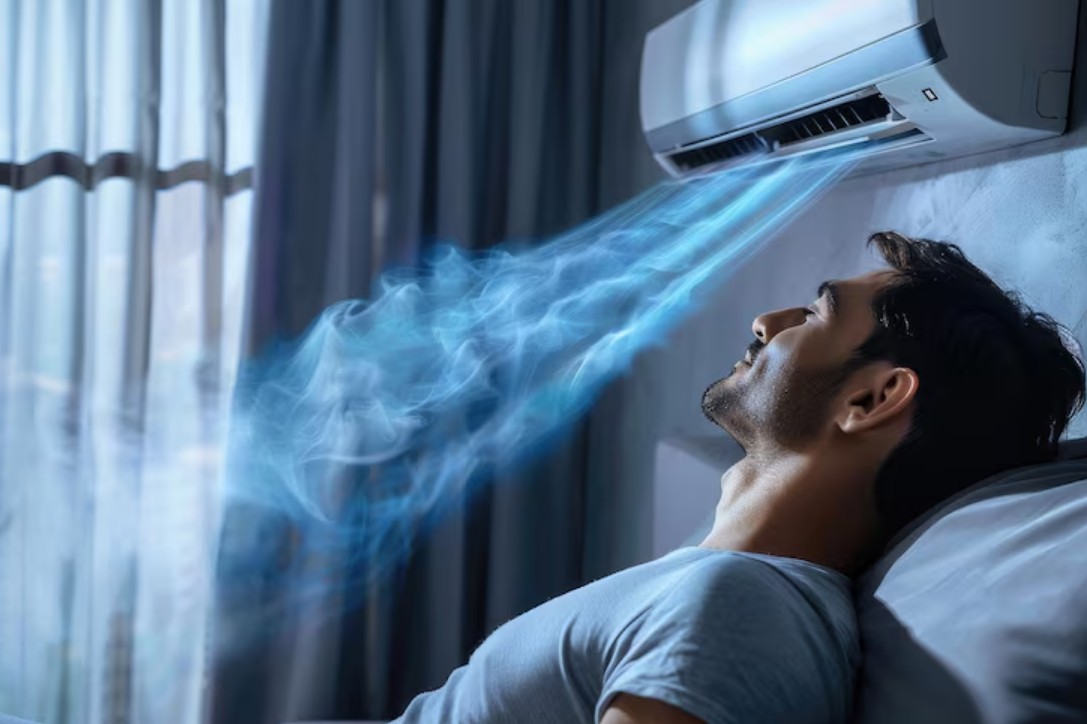
Your air conditioner is not the enemy. But it demands more attention than most people give it. Left uncleaned and unmaintained, running too cold in a sealed room for hours at a stretch, it can quietly chip away at your respiratory health in ways that are easy to mistake for seasonal allergies, recurring colds, or general fatigue.
ALSO READ- IVF Success Rate By Age: Expert Shares What To Expect In Your 30s And 40s
Keep reading Herzindagi for more such stories.
Image Courtesy: Freepik
Also watch this video
Herzindagi video
Our aim is to provide accurate, safe and expert verified information through our articles and social media handles. The remedies, advice and tips mentioned here are for general information only. Please consult your expert before trying any kind of health, beauty, life hacks or astrology related tips. For any feedback or complaint, contact us at [email protected].