
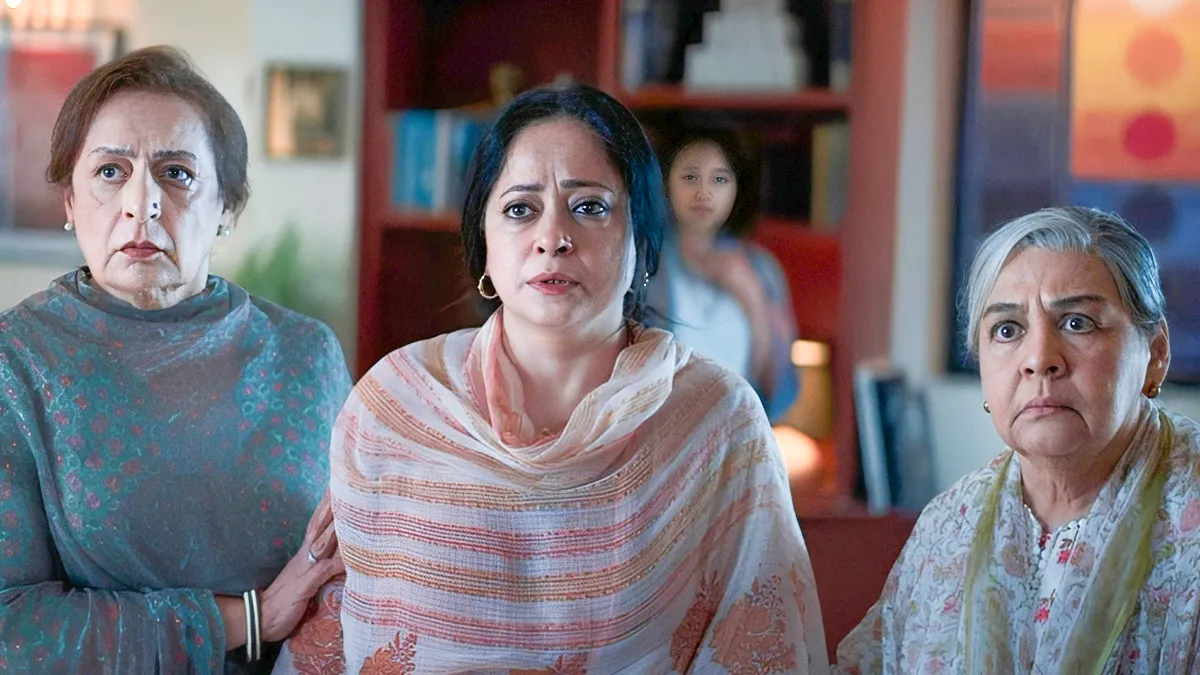
Fifteen years after her acclaimed debut, ‘Peepli Live’ premiered at Sundance and became India's Oscar entry, filmmaker Anusha Rizvi has delivered something extraordinary: a film that doesn't just pass the Bechdel test, it creates an entirely new standard for portraying Muslim women on screen. ‘The Great Shamsuddin Family’, currently streaming on JioHotstar, is the feminist film we desperately needed, one that every woman should experience regardless of her faith or background.

What makes this film revolutionary isn't just its ensemble of extraordinary actresses or its focus on women's stories. Rizvi accomplishes something far more significant: she dismantles every tired stereotype about Muslim women in cinema. Her characters pray and smoke, discuss pilgrimages and drink tea, handle money crises and career ambitions, sometimes all within the same chaotic afternoon. Their faith exists naturally in their lives rather than serving as the central conflict that must be explained or resolved.
This is what we might call ‘The Rizvi Test’, a new benchmark for authentic Muslim female representation where women are allowed to be complicated, contradictory, and gloriously human without their identity becoming a burden they must constantly justify.
The film unfolds over a single pressure-cooker day in Bani Ahmed's Delhi apartment, where the magnificent Mughal-era Humayun's Tomb looms in the background, a quiet reminder of India's layered cultural heritage. Bani, played with restrained brilliance by Kritika Kamra, is racing against a deadline for a job application abroad while her entire extended family descends upon her sanctuary, each carrying their own crisis.
Here's where Rizvi captures something achingly real about contemporary womanhood: Bani isn't living the Instagram-worthy version of the modern hustle. She's drowning in it. The laptop stays open while relatives arrive unannounced, emotional labour gets silently assigned, and the ‘capable one’ in the family never gets to clock out. When Bani finally admits to her sister that she's exhausted from always being strong and craves someone to take care of her for once, it cuts deep. That vulnerability transcends religion, culture, and geography; it's the universal experience of women expected to hold everything together while quietly falling apart.
What sets this film apart is its refusal to make its female characters likeable in conventional ways. The Shamsuddin women interrupt each other, pass judgment, harbour resentments, and engage in subtle power plays, all while loving each other fiercely. This messy authenticity feels like recognition rather than mere representation.
Farida Jalal's Akko steals scenes as the sharp-tongued matriarch who bears no resemblance to the gentle mothers she once portrayed. She's opinionated, hilarious, and occasionally infuriating. Sheeba Chadha and Dolly Ahluwalia play sisters whose pilgrimage plans coexist comfortably with worldly calculations. Shreya Dhanwanthary brings reckless charm to Iram, who shows up with cash from a disastrous investment and expects Bani to fix everything. Juhi Babbar Soni's Humaira quietly carries disappointments while mediating family tensions.
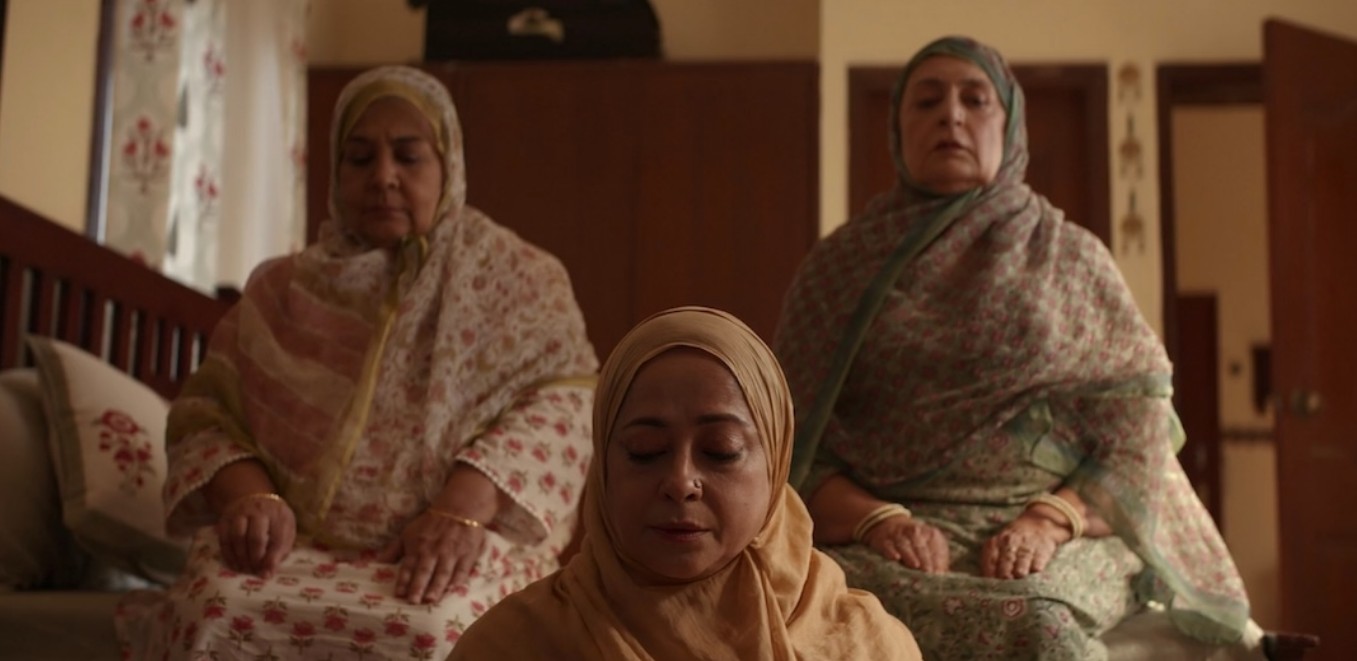
These aren't symbols or moral anchors. They're women with desires, fears, and flaws—the kind cinema rarely grants to Muslim female characters.
Rizvi's genius lies in how she addresses minority anxiety in contemporary India without letting it overwhelm the story. The threat exists, subtle references to communal violence, Bani's practical decision to seek opportunities abroad because it feels ‘safer’, but these realities sit alongside universal concerns about money, marriage, career, and family expectations. The film acknowledges that being young, Indian, and Muslim carries specific challenges while insisting that these women's lives contain multitudes beyond their marginalisation.
The cramped apartment becomes a stage where tradition constantly negotiates with modernity, where ancient monuments witness contemporary struggles, and where family bonds prove both suffocating and essential.
Don't Miss: Why Sunidhi Chauhan’s Reinvention, and the I Am Home Tour Buzz, Feels So Earned
‘The Great Shamsuddin Family’ matters because it offers something radical in its ordinariness. By letting Muslim women be difficult, funny, ambitious, tired, and fully human, Rizvi dismantles stereotypes without making a show of it. In an entertainment landscape obsessed with extremes, the Shamsuddins offer the rare dignity of simply existing.
The film captures what ‘having it all’ actually feels like for modern Indian women: doing everything, carrying everyone, and rarely getting to rest. It portrays the mental load, the constant interruptions, the expectation that women will solve problems they didn't create. And it does all this while remaining engaging, humorous, and deeply humane.
Thodi si daant, thoda sa gussa; lekin uske peeche chhupa hai dher saara pyaar 🥰
— JioHotstar (@JioHotstar) December 17, 2025
The Great Shamsuddin Family, now streaming only on JioHotstar.@anusharizvi #AlokJain #AjitAndhare #MahmoodFarooqui @Kritika_Kamra #FaridaJalal @JuhiBabbarSoni @shreyadhan13 @purab_kohli… pic.twitter.com/7bveR2fH0B
This isn't a lecture on feminism. It's a living portrait of resilience, contradiction, and the exhausting beauty of women's lives. It refuses neat resolutions where conflicts mend with hugs. Instead, it ends where it began: with women still figuring things out, still claiming their space, still unapologetically themselves.
That's the revolution, not in grand gestures, but in the permission to be imperfect, the freedom to be seen completely. Every woman deserves to see herself reflected in that truth, which is precisely why this film is essential viewing.
‘The Great Shamsuddin Family’ is currently streaming on JioHotstar in India.
Don't Miss: 5 Life Lessons You Can Learn From Stranger Things
Keep reading Herzindagi for more such stories.
Image Courtesy: Instagram
Our aim is to provide accurate, safe and expert verified information through our articles and social media handles. The remedies, advice and tips mentioned here are for general information only. Please consult your expert before trying any kind of health, beauty, life hacks or astrology related tips. For any feedback or complaint, contact us at [email protected].