Wed Apr 1, 2026 | Updated 09:54 AM IST HZ Awards 2026

Over 4,000 years ago, someone picked up bronze and made a girl mid-dance. Arm out. Head tilted. Completely unbothered. The Dancing Girl of Mohenjo-daro is one of the earliest sculptures from the Indian subcontinent, and she didn't wait for permission to take up space.
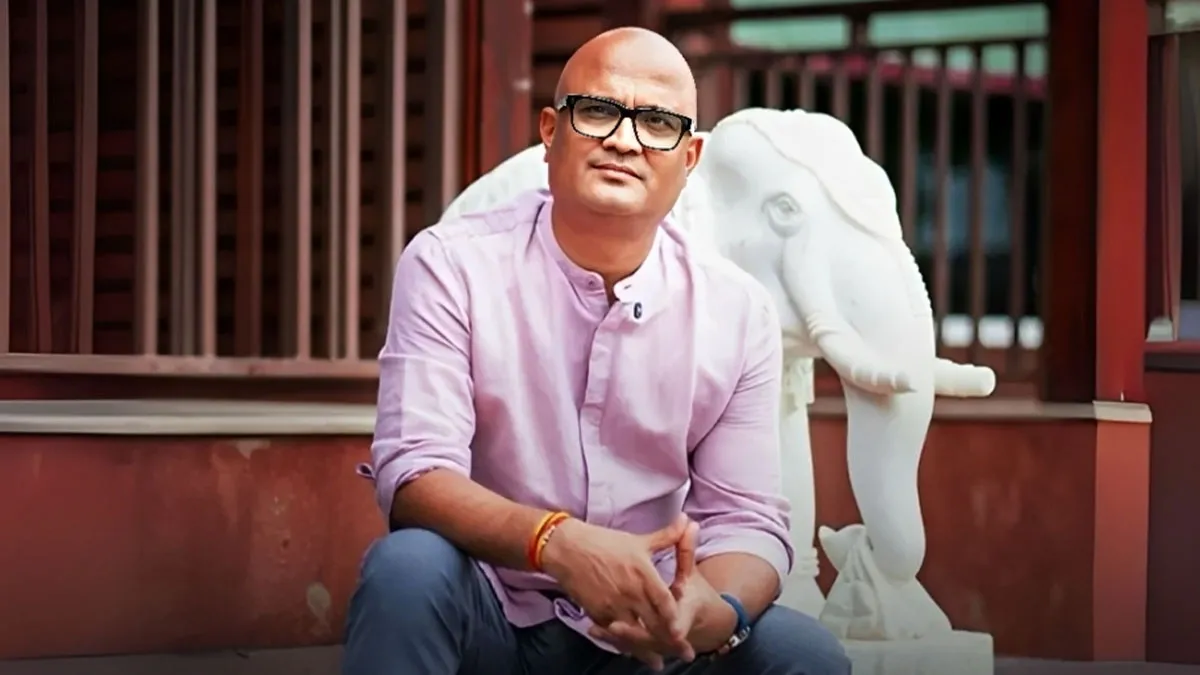
Naresh Kumar Kumawat has spent a lifetime working with stone, bronze, and scale that most people can't even imagine. He built the 369-foot Statue of Belief in Nathdwara, the tallest Shiva in the world. He sculpted the Samudra Manthan across the walls of India's new Parliament building. His Mahatma Gandhi sculptures stand in over 30 countries, from Geneva to Japan to South Africa. When he looks at the Dancing Girl, he sees something that most people miss.
"She is not the depiction of a woman," he says. "She is an image of confidence frozen in time."
That distinction matters more than it sounds.
View this post on Instagram
Walk into the Samudra Manthan at Parliament, and you will find women woven into the story, apsaras, goddesses, Parvati herself. They are there. But are they seen?
Kumawat is honest about this. "In large compositions, these forms are seen but not truly observed," he says. He has made it his intention to ensure that these figures are not decorative fillers but load-bearing parts of the story. "Our responsibility is to give them presence rather than mere placement."
That is a quiet but significant admission. India's grand artistic tradition has always invoked Shakti, the feminine force that holds the universe together. Durga. Lakshmi. Saraswati. Kali. We put her on pedestals, literally carved in stone. But invoking power and actually honouring it are two very different things. One is ritual. The other requires intention.
ALSO READ- Dancing in the Digital Age: How Can Classical Art Survive the Scroll?
Rajasthan's temples are filled with Surasundaris, women in full beauty, full confidence, full presence. They take up space without apology. But the artists who decided how much space they got, how they stood, what their faces said, were almost entirely men.
Kumawat carries that tradition. He is direct about the weight of it.
"Sculpting womanhood is both an artistic and ethical responsibility," he says. "Every little detail must exude respect and depict the right intention. Artists must remember that we possess the power to create a cultural memory."
Cultural memory is not a small thing. What gets carved gets remembered. What gets left out gets forgotten. For centuries, women were the subject of Indian sculpture, divine, beautiful, symbolic, but rarely the ones holding the tools. The craft was handed down from father to son. The feminine was celebrated in stone while the actual women who might have shaped it were kept at a distance.
View this post on Instagram
Kumawat has watched people across 30 countries receive Indian sculpture. He knows what they see first: divinity, grace, the ideal. And he is willing to say what that leaves out.
"Indian women are far more layered. They portray resilience and are grounded in reality beyond mythology. As artists, we have historically portrayed the ideal, sometimes at the cost of the everyday truth."
That is a sculptor talking about his own tradition with clear eyes. The goddess is real. But she is one-dimensional. The woman who wakes up, works, raises children, fights, endures, creates — she has rarely been given the same reverence in stone. Art has always had the power to say: this person matters, this life is worth remembering. When that power is used only for the mythological and not the everyday, something is lost.
![[image] - 95175](https://images.herzindagi.info/her-zindagi-english/images/2026/03/27/template/image/[image]---95175-1774610357380.jpg)
So what does Kumawat say to a young woman today who wants to do what he does?
"The craft belongs to you as much as anyone else. Art does not recognise gender. It only recognises dedication, patience and vision."
He goes further. He doesn't frame women as welcome guests in a male tradition. He frames their presence as necessary. "Artists need the feminine energy to bring new depth and authenticity to this art form."
That is not just encouragement. That is an acknowledgement that something has been missing, and that the art itself is incomplete without it.
ALSO READ- Turning Everyday Scraps Into Emotion: The Dreamlike Collages of Stuti Sukhani
Keep reading Herzindagi for more such stories.
Image Courtesy: Freepik
Also watch this video
Herzindagi video
Our aim is to provide accurate, safe and expert verified information through our articles and social media handles. The remedies, advice and tips mentioned here are for general information only. Please consult your expert before trying any kind of health, beauty, life hacks or astrology related tips. For any feedback or complaint, contact us at [email protected].