Sun Mar 22, 2026 | Updated 06:25 AM IST HZ Awards 2026

There is a particular kind of genius in Gulzar's writing. Sampooran Singh Kalra, poet, lyricist, director, and now an Academy Award and Grammy winner, has spent decades making you feel things you cannot quite name. He wraps desire, longing, and cheekiness inside language so delicate that two people can listen to the same song and walk away with entirely different understandings of it.
Think of ‘Namak Ishq Ka’ from ‘Omkara’. Or ‘Aye Udi Udi Udi’ from ‘Saathiya’, filmed on a newlywed couple, leaves just enough unsaid to make your imagination do the work. Even when Gulzar stepped into bolder territory, ‘Beedi Jalaile’, ‘Sweeta’ from ‘Kill Dil’, he never once lost his artistry. His lyrics are like an abstract painting: two people can admire the same canvas for opposite reasons, and neither one is wrong.
Perhaps the finest example of this craft sits in ‘Kaminey’. When Guddu accidentally impregnates Sweety and the whole chaotic situation needs to be conveyed to the audience, Gulzar did not resort to the obvious. He wrote: ‘Raat kuch aisa hua, jaisa hota toh nahin. Thaam ke rakha mujhe, Main bhi khota toh nahin. Ek hi lat suljhaane mein saari raat guzaari.’ Technically, he is singing about untangling a lock of hair. But everyone in the cinema hall knew exactly what had happened, and they were grinning.
That is the difference between a craftsman and a shock merchant. Gulzar trusted his audience. Today's Bollywood, and its regional counterparts, seem to trust nothing but outrage.
Which brings us, rather depressingly, to ‘Sarke Chunar Teri Sarke’.
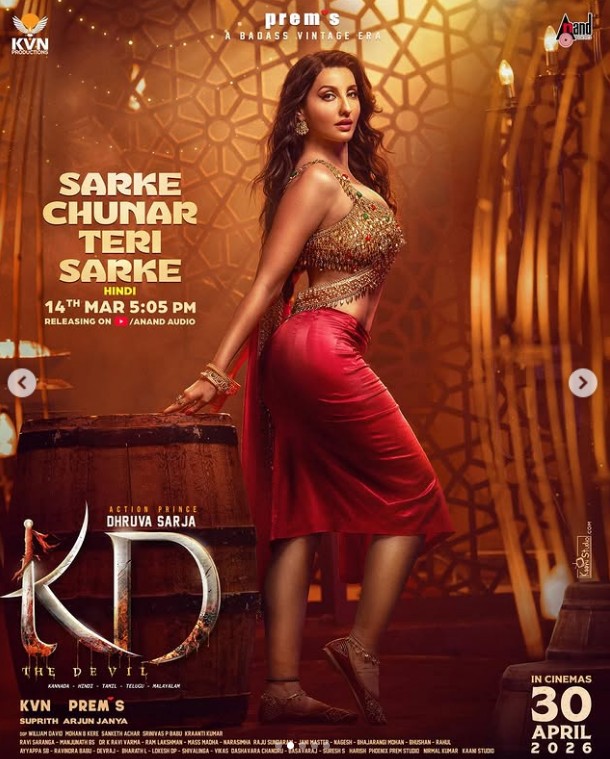
Released on March 15, 2025, ‘Sarke Chunar Teri Sarke’ is a featured track from the upcoming pan-India Kannada film ‘KD: The Devil’, directed by Prem. The film is set in 1970s Bangalore's underworld and is reportedly inspired by true events. It stars Dhruva Sarja in the lead role, with Shilpa Shetty Kundra as Satyavati, and is scheduled for worldwide release on April 30, 2026.
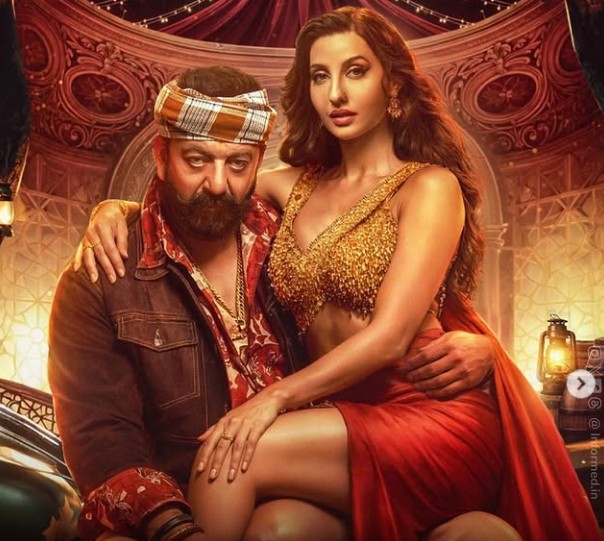
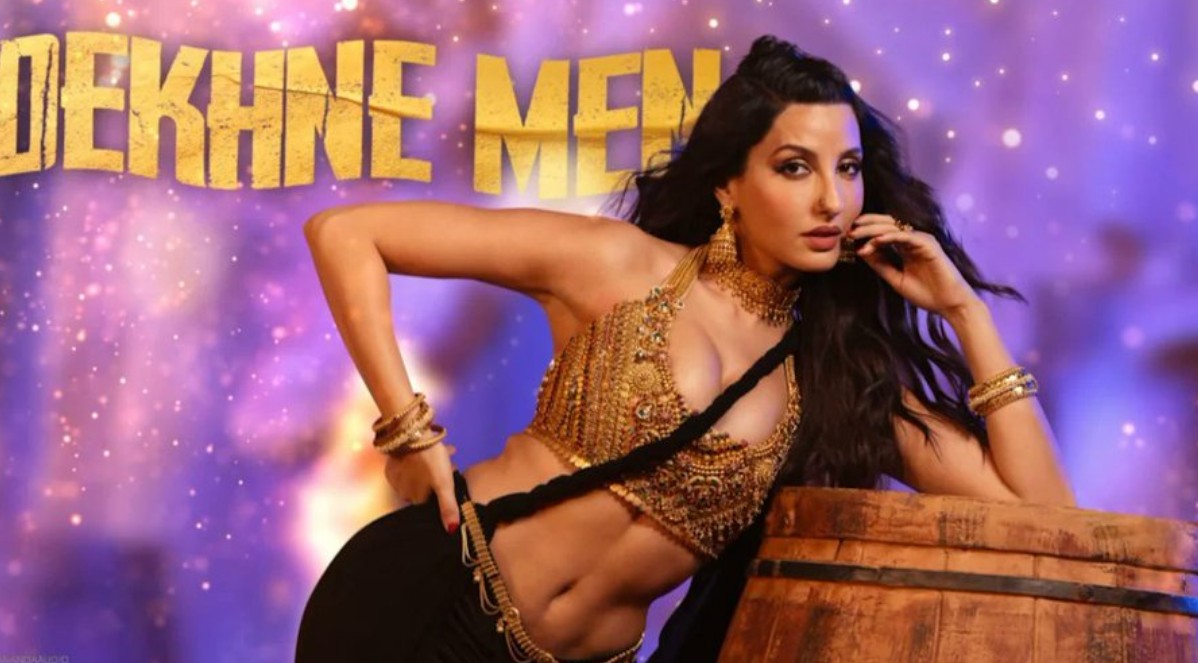
The song features Nora Fatehi, marking her Kannada debut, alongside Bollywood veteran Sanjay Dutt. Music was composed by Arjun Janya, vocals were handled by folk singer Mangli, and the Hindi lyrics were penned by Raqeeb Alam. The choreography was directed by Prem himself, set against a bar-like backdrop.
Within hours of its release, the song ignited a ferocious debate. The backlash came not just from audiences but from child rights groups, artists, and even members of national bodies.
Let us be honest about what these lyrics say, because there is no polite way to dress them up.
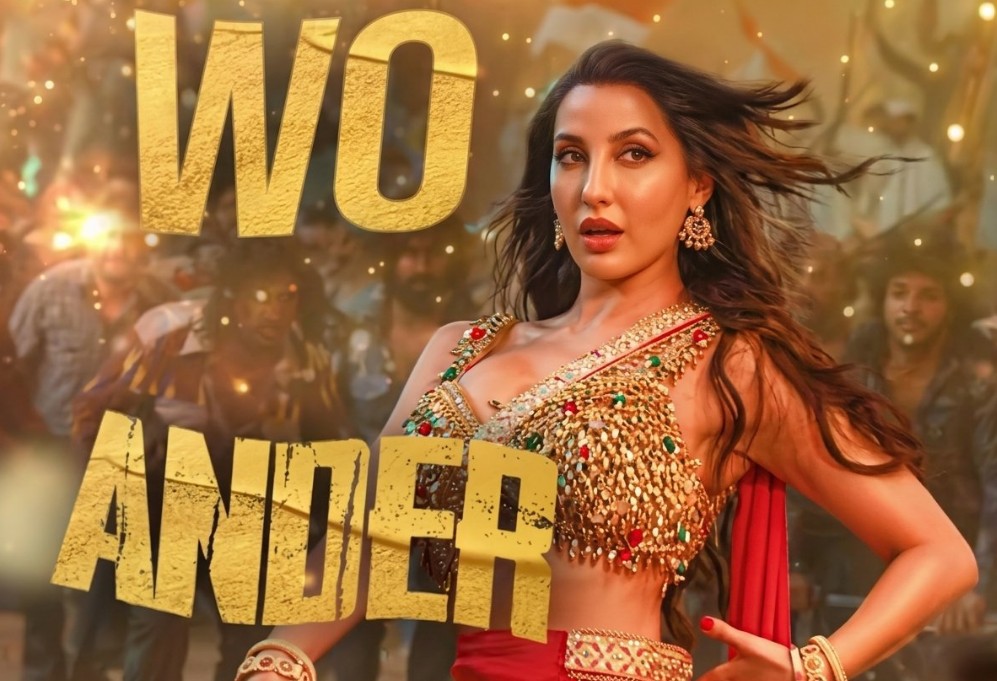
The Hindi version includes the lines: ‘Pehle uthale, andar wo daale, neeche ek boond na girae, khali kar ke nikale, mujh pe na girana mujhe lagta hai dar.’
Roughly translated: ‘First lift it, put it inside, don't let a single drop fall, empty it fully before pulling out, don't spill it on me, I feel scared.’
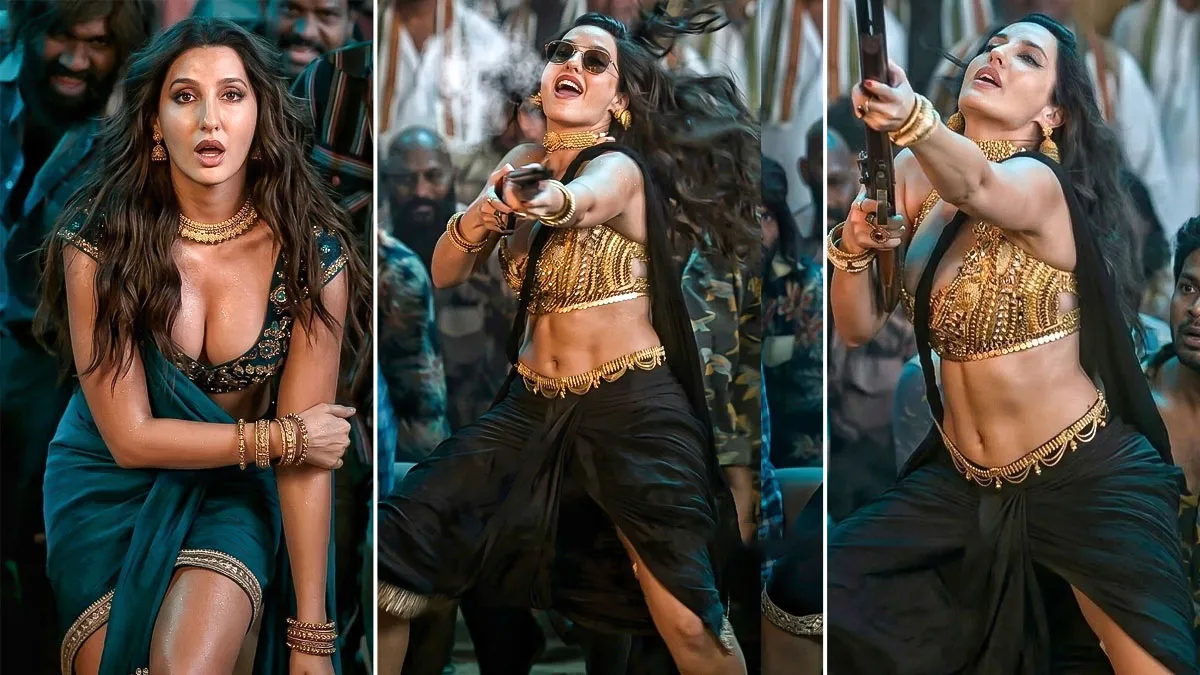
On the surface, one could argue the song is about pouring a drink, a bottle of alcohol, perhaps. That, presumably, is the official defence. But the visual language accompanying these lines, Sanjay Dutt lifting his lungi whilst performing pelvic thrusts as Fatehi's chunar slips off her shoulder, leaves absolutely nothing open to interpretation. The songwriter made his intentions transparent. There is no painting here, abstract or otherwise. It is a billboard.
Hey, arey sar, sar, sar, sar, sar se chundri sarke
Hey, dhak, dhak, dhak, dhak dil ye mera dhadke
Hallu se tu thaam le
Ye pallu mera, tera naam le
‘Hey, the chunar (veil/dupatta) slides off my head / My heart goes dhak dhak (beats fast) / Hold it gently / This pallu of mine, take your name’
Sarke sarke, chunar teri sarke
Sarke sarke, chunar teri sarke
Khalnayak hoon main
‘Sliding, sliding, your chunar is sliding / I am the villain’
Pehle uthale, andar wo daale
Neeche ek boond na giraaye
Khaali kar ke nikaale
Mujh pe na giraana mujhe lagta hai darr
Bhed khul jaaye na sambhaal ke jaana ghar
Choosega ya chaatega, jo karega kar
Teri botal pe na pade kisi ki bhi nazar
‘First lift it, put it inside / Don't let even one drop fall below / Empty it out and then pull it out / Don't spill it on me, I'm scared / Don't let the secret out, go home carefully / Whether you'll suck it or lick it, do what you will / Don't let anyone's eyes fall on your bottle’
Sarke sarke, chunar teri sarke
Khalnayak hoon main
O moonchon waale itna bata de
Ghar mein jawan gharwali kyun chaahe baahar waali
Mahangi hoon main thodi
Par aaungi na ghabra
Khush ho jaaye to phir
Mujhe lahenga dila
Dekhne mein hoon naram
Choone mein toh garam
Chatpati mein yaar, jaise aam ka achaar
‘O moustachioed man, tell me this / When there's a young wife at home, why do you want the woman outside? / I'm a little expensive / But I'll come, don't worry / If you're pleased, then / Get me a lehenga / I look soft on the outside / But I'm hot to the touch / I'm spicy, my friend, like raw mango pickle’
Sarke sarke, chunar teri sarke
Khalnayak hoon main
The Hindi version has since been taken down from official platforms. Regional language versions, however, remain available on YouTube, which is, as ever, accessible to absolutely everyone, including children.
‘Sarke Chunar’ did not arrive in a vacuum. It joins a growing list of tracks that have drawn formal complaints and legal consequences in recent years.
‘Tateeree’ by Badshah (2026) is currently the most explosive case. The line ‘Aaya Badshah doli chadhaane, in sabki ghodi banaane’ was widely condemned for normalising predatory male behaviour. The music video featured girls in school uniforms, which sharpened the outrage considerably. Badshah faced an FIR in Haryana, a formal summons from the Haryana State Commission for Women, issued a public apology, and removed the track from all platforms. The Lawrence Bishnoi gang also issued a death threat in connection with the song.
‘MF Gabru’ by Karan Aujla (2025) was flagged for offensive language, and the Punjab State Women's Commission formally summoned the artist.
‘Millionaire’ by Yo Yo Honey Singh (2024) landed him before the Punjab State Women's Commission again. Commission chairperson Raj Lali Gill sought a ban and demanded a police investigation.
‘Naa Ready’ from Leo (2023) drew legal complaints under the Narcotic Drugs and Psychotropic Substances Act, resulting in actual censorship of the final release.
And this is before we even mention ‘Le Le Raja’ from ‘Matka’, also featuring Nora Fatehi, with lyrics that go ‘kha ja mera tarbuja’, or ‘Dabidi Dibidi’, where Nandamuri Balakrishna casually slapped Urvashi Rautela on screen as though it were entirely unremarkable.
Priyank Kanungo, a member of the National Human Rights Commission, publicly questioned the song's suitability for families and indicated that official notices would be issued. The Central Board of Film Certification has also been called upon by some quarters to formally review the content.
Whether those notices will result in meaningful consequences remains to be seen. History suggests they often do not.
This is the question that nobody in the industry wants to answer directly.
The songwriter writes the lines. The director approves them. The actors perform them. The CBFC clears the final cut. The streaming platforms distribute it globally. And then the audience, including teenagers watching reels at midnight, consumes it freely.
At every single step along that chain, someone had the power to say no. Nobody did.
What makes this moment different from previous controversies is scale. Songs that once stayed regional now travel pan-India and beyond, thanks to YouTube, Instagram Reels, and streaming platforms. A Kannada item number with Hindi dubbing becomes a national conversation overnight. The reach of regressive content has expanded enormously, even as the content itself has become more explicit.
There is also a commercial logic that nobody in the industry is particularly eager to discuss in public: controversy drives views. Outrage generates headlines. Headlines generate curiosity. Curiosity generates streams. By the time a song gets banned or taken down, it has already been viewed tens of millions of times. The damage to young minds, to cultural norms, to the women being objectified, is done. The numbers, however, are excellent.
How low is too low?
‘Sarke Chunar’ is not an anomaly. It is a symptom. The film industry has been asking audiences to accept increasingly explicit content as entertainment for decades, and audiences have largely obliged. The songs we once dismissed as regressive footnotes, ‘Khada Hai Khada Hai’, ‘Main Maalgadi Tu Dhakka Laga’, ‘Subah Ko Leti Hai’, were not footnotes. They were the blueprint.
Bollywood itself may have pulled back from the most egregious examples in recent years. But other industries, Bhojpuri, Telugu, Kannada, and Punjabi, have moved into that space without hesitation. The baton was not dropped. It was passed.
Gulzar is still writing. Still finding ways to say the complicated, the tender, the cheeky, and the profound without resorting to the obvious. His lyrics remain proof that restraint is not a limitation; it is a form of respect. Respect for the language, for the audience, and for the art itself.
Perhaps today's lyricists ought to spend less time with shock tactics and more time with their back catalogue. But then, as someone once wrote far more elegantly than this piece ever could, there is only one Gulzar. And the industry seems to have stopped looking for another.
ALSO READ- Nora Fatehi’s New Song 'Sarke Chunar Teri Sarke' Sparks Controversy—Lyrics Leave Internet Divided
Keep reading Herzindagi for more such stories.
Image Courtesy: Instagram
Our aim is to provide accurate, safe and expert verified information through our articles and social media handles. The remedies, advice and tips mentioned here are for general information only. Please consult your expert before trying any kind of health, beauty, life hacks or astrology related tips. For any feedback or complaint, contact us at [email protected].