Sun Mar 22, 2026 | Updated 11:29 AM IST HZ Awards 2026

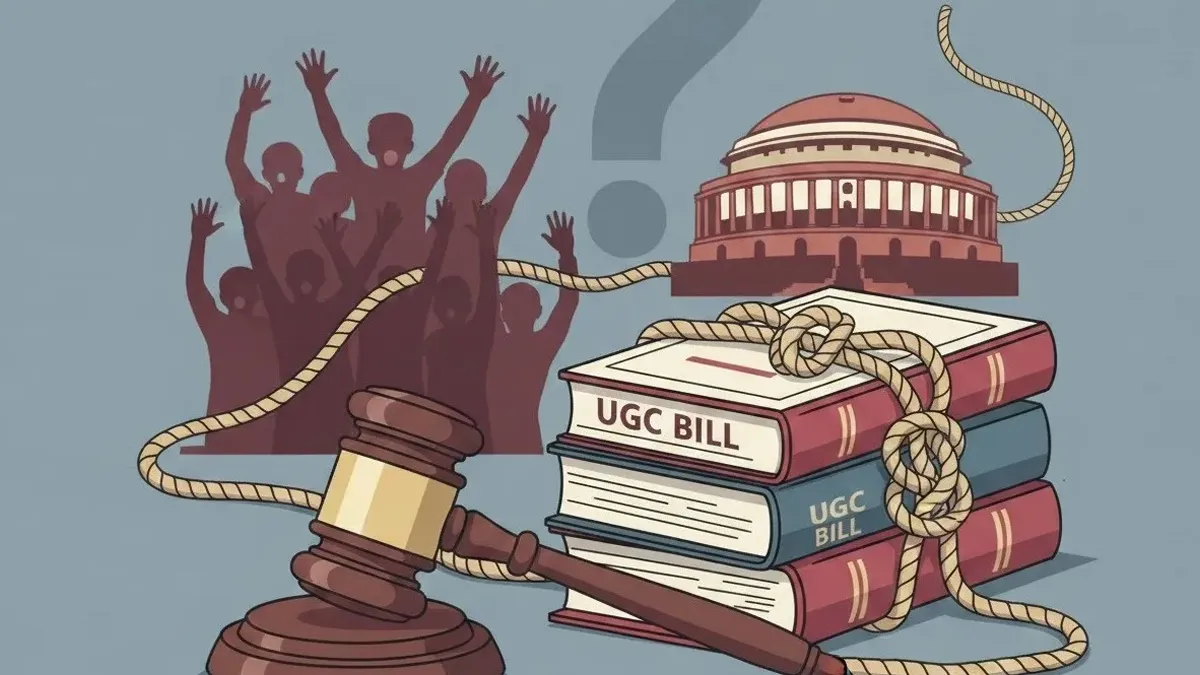
UGC Bill 2026: The University Grants Commission (UGC) issued a formal notification regarding the Promotion of Equity in Higher Education Institutions Regulations on January 13, 2026. This regulation is also known as the ‘UGC Bill 2026’ in the media. It replaces the 2012 guidelines, which were introduced a decade ago. The 2026 regulations are different from the previous guidelines in that they are enforceable and have a strict governance structure that does not allow any form of discrimination in Indian campuses.
UGC Bill 2026 refers to the University Grants Commission (Promotion of Equity in Higher Education Institutions) Regulations, 2026, officially notified on January 13, 2026. It is a legally enforceable framework aimed at eliminating discrimination and ensuring dignity, equality, and safety for students and staff across Indian higher education institutions. The new regulations replace the earlier 2012 UGC guidelines, which were advisory in nature.
The new norms bring the focus from mere access to the campus experience, making institutional heads directly responsible for the safety and dignity of students and staff.
Mandatory Equal Opportunity Centres (EOC): Every higher education institution (HEI) is required to set up an EOC. This centre becomes the ‘nodal agency’ for all equity policies, counselling, and grievance redressal.
Formation of Equity Committees: Every EOC is required to set up a mandatory Equity Committee. It is to be headed by the head of the institution (VC or Principal) and is to comprise representatives from SC, ST, OBC, Women, and Persons with Disabilities (PwBD).
Time-Bound Grievance Redressal: The rules are framed in a way that ensures a prompt response. The Equity Committee is mandated to take action within 24 hours of receiving the complaint and to provide a final report in 15 working days.
Expanded Scope (OBC Inclusion): For the first time, Other Backwards Classes (OBCs) have been included as a protected class, along with SCs and STs, thus expanding the legal mandate of universities to deal with caste discrimination.
24/7 Monitoring: Universities are now mandated to run a 24-hour equity helpline and an online portal for reporting harassment or discrimination.
The new UGC Bill shifts the focus from mere access to education to creating safe, inclusive, and discrimination-free campuses. It aims to ensure that complaints are addressed quickly, transparently, and responsibly, reducing prolonged trauma for students.
In short, the UGC Bill 2026 marks a major step toward institutional accountability and social justice in India’s higher education system.

The 2026 framework is intended to go beyond paper protection and establish a real change in campus culture.
Dignity and Safety: The new ‘Human Dignity’ clause shields students from both direct (verbal) and indirect (structural) discrimination in hostels, labs, and classrooms.
Accountability: The new framework holds the Vice-Chancellor or Principal accountable, preventing institutions from burying complaints or delaying investigations.
Fast Justice: The new 15-day deadline ensures that victims do not have to wait months for justice, which can be a psychological burden for students.
Prevention by Equity Squads: The new Equity Squads and Student Ambassadors will be tasked with monitoring weak areas on campus to prevent bullying or discrimination before it happens.
ALSO READ- iPhone 18 Pro Max: India Launch Date, Expected Price, And Full Specifications Revealed
The UGC has given these regulations stiff penalties for non-compliance. Failure to establish EOCs or adhere to the 2026 guidelines by institutions will result in.
Debarment from UGC grants and schemes.
Withdrawal of recognition or permission to offer degrees.
Revocation of recognition as a university under the UGC Act.

Although the regulations are intended to promote social justice, they have generated a national debate. Opponents and students, especially from the General Category, have expressed concerns about.
Lack of Representation: The requirement for Equity Committees does not include representation from the General Category, which may result in an inequality in hearings.
False Complaints: Unlike the previous versions, the final version of the 2026 regulations does not include any specific mention of punishment for false or malicious complaints.
Any student, faculty member, or non-teaching staff who experiences discrimination based on caste, gender, disability, or social background can file a complaint through the Equal Opportunity Centre or the designated online portal.
Image credits: Freepik
ALSO READ- NYT Connections Hints Today, January 27, 2026: Category Clues And Answers
If you liked this story, then please share it. To read more such stories, stay connected to HerZindagi.
Also watch this video
Herzindagi video
Our aim is to provide accurate, safe and expert verified information through our articles and social media handles. The remedies, advice and tips mentioned here are for general information only. Please consult your expert before trying any kind of health, beauty, life hacks or astrology related tips. For any feedback or complaint, contact us at [email protected].