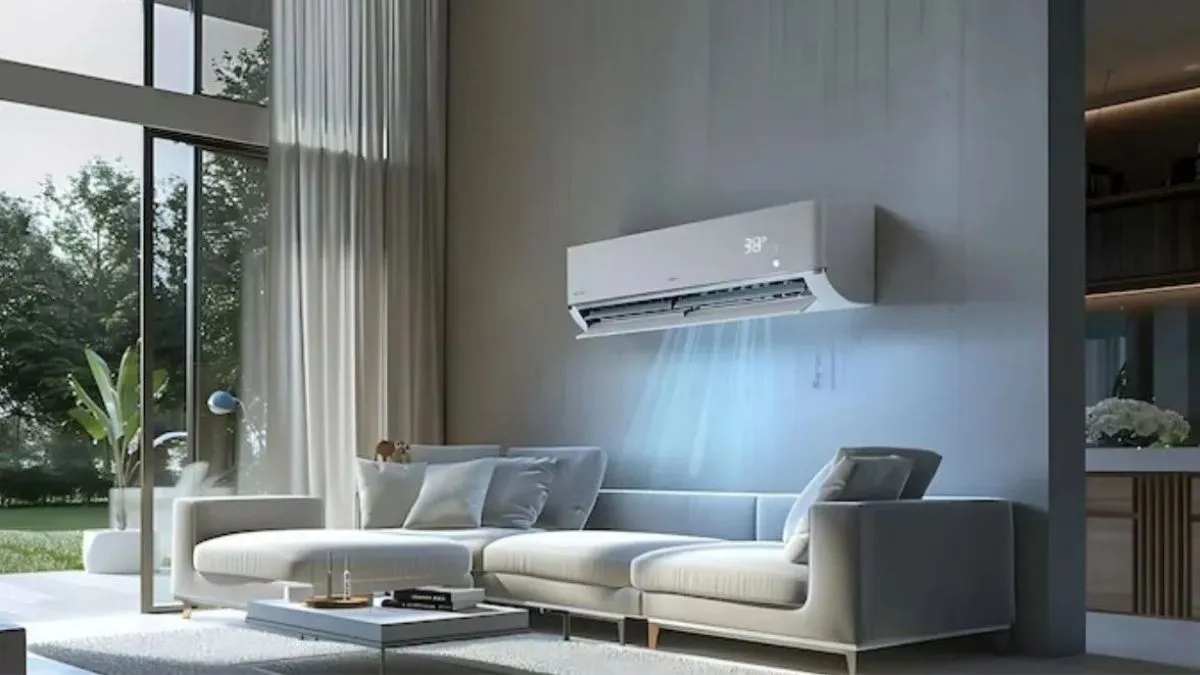

Indian homes are changing fast. What was once considered a luxury appliance is steadily becoming a household essential: the air conditioner. With rising temperatures, longer heatwaves, and growing comfort expectations, cooling solutions are moving from occasional convenience to everyday necessity.
Urbanisation is bringing more families into towns and cities where summers can be intense, while higher disposable incomes are enabling households to invest in smarter, more energy-efficient appliances. Consumers are increasingly opting for inverter and split air conditioners that offer quieter operation, advanced air purification, and smart controls features that go beyond simple cooling to improve overall indoor comfort and health.
At the same time, local AC brands are ramping up to keep pace with demand, bringing products that are better adapted to Indian climates and household needs. Wider retail networks and e-commerce platforms are making these appliances accessible even in smaller towns, creating a rapidly expanding market that reflects both evolving lifestyles and technological innovation.
The result is a residential air conditioning market that is dynamic, fast-growing, and increasingly central to modern Indian living driven as much by consumer expectations as by advances in product design, efficiency, and availability.
Market Snapshot & Demand Drivers
India’s residential AC market is growing fast. While overall penetration in Indian homes remains relatively low, demand has accelerated sharply in recent years. More households are now opting for inverter split models and energy-efficient air conditioners, and local manufacturing capacity is being expanded to match this surge in demand. As per IMARC Group, the Indian air conditioning market was valued at around USD 6.15 billion in 2025, with a significant portion of this coming from the residential segment, particularly room air conditioners.
Key demand drivers:
- Climate: Longer and hotter summers are increasing the number of months households need reliable cooling.
- Affordability & finance: EMI options and affordable entry-level models are making AC ownership accessible to aspirational buyers.
- Energy concerns: Rising electricity costs are pushing consumers toward inverter technology and higher star ratings, even if upfront costs are higher.
- Distribution: Organized retail and e-commerce are expanding reach, bringing brands into smaller towns and cities.
- Policy: Government incentives and schemes supporting local component manufacturing are reshaping supply chains within India.
Manufacturing & the “Make in India” Effect
Two major trends are transforming AC manufacturing in India:
- Localization of assembly and components: Many companies are moving compressor and PCB assembly, coil manufacturing, and sheet-metal fabrication to India. This reduces import dependency, shortens lead times, and allows for more flexible pricing.
- Capacity expansion: Brands are investing in new factories or expanding existing production lines to meet sustained demand growth.
Why it matters:
- Shorter supply chains reduce the risk of stockouts and price spikes.
- Local manufacturing creates jobs and enables better customization for Indian conditions, such as higher ambient temperatures and dust-heavy environments.
- Domestic OEMs and component specialists (like heat exchangers and motor suppliers) have become strategic partners, meaning the industry relies as much on these suppliers as on the household brand names themselves.
Leading Residential AC Brands
Several brands dominate India’s residential AC market, each with its own strengths in market share, product range, technology, or distribution network.
Voltas Limited
Voltas Limited, a Tata Group company, has long been recognised as India’s leading residential air conditioner brand, consistently holding the number one position in the highly competitive room AC market. Voltas ACs success is rooted in a combination of large‑scale local manufacturing, extensive distribution reach across both urban and smaller towns, and product offerings tailored to Indian climate conditions, which help ensure strong sales and wide customer adoption.
In the fiscal year 2023‑24, Voltas achieved a record‑high milestone by selling over 2 million air conditioner units, becoming the first brand in India to cross this mark in a single financial year.
This represented a 35% year‑on‑year increase in AC sales volume, driven by consistent consumer demand, a robust offline and online distribution network, and attractive product launches across price segments. With this performance, Voltas reinforced its position as the undisputed market leader in the room AC category in India.
|
Brand |
Parent Company |
Key Strengths |
FY 2023‑24 Sales |
Growth |
|
Voltas Limited |
Tata Group |
Large-scale local manufacturing, extensive distribution, India-tuned products |
2 million AC units |
35% YoY increase |
Source: https://www.voltas.in/images/voltas-info/Voltas_info_Sep-2024.pdf
Daikin
Daikin has firmly established itself as the second‑largest player in India’s room air conditioner market, holding an estimated 18 to 19% market share behind the leader Voltas. This position reflects Daikin’s rapid growth in sales and expanding footprint across the country, particularly in the premium and performance segments of residential cooling.
What sets Daikin apart is its emphasis on global technology leadership combined with aggressive localisation in India. The company has invested heavily in local manufacturing, including multiple plants in Neemrana (Rajasthan) and Sri City (Andhra Pradesh), enabling it to scale production and reduce reliance on imports. Daikin has also leveraged its strong R&D capabilities to adapt products specifically for Indian needs, such as inverter compressors for energy efficiency, quieter operation, and models designed to perform well at high ambient temperatures all traits that appeal to urban and premium buyers.
|
Brand |
Parent Company |
Key Strengths |
FY 2023‑24 Sales |
Growth |
|
Daikin Airconditioning India Pvt Ltd |
Daikin Group |
Global R&D, strong inverter technology, aggressive localisation, high-efficiency and quiet operation |
An estimated 18 to 19% market share |
Rapid growth, expanding footprint, particularly in premium/residential segments |
Source: https://www.soic.in/blog-page/from-heatwaves-to-market-waves-decoding-indias-ac-industry
Blue Star Limited
Blue Star entered India’s residential air conditioner market in 2011 and has steadily strengthened its position to become one of the top five players in the segment. The company’s heritage in commercial HVAC engineering has given it an edge in building robust, durable room ACs that perform well in larger spaces and challenging conditions, making it a popular choice for buyers who prioritise strong cooling and long service life over flash features.
Market share and growth: In the fiscal year 2023–24, Blue Star held around 13.75% of the residential AC market in value terms, reflecting its consistent performance and expanding footprint. The company aims to further increase this share to about 15% by FY25, underlining strong ambitions in the highly competitive home cooling segment.
|
Brand |
Parent Company |
Key Strengths |
FY 2023‑24 Sales |
Growth |
|
Blue Star Limited |
Blue Star Group |
Robust, durable ACs suitable for large rooms and tough conditions, strong commercial HVAC heritage |
13.75% market share |
Consistent performance, expanding footprint, aiming for 15% market share by FY25 |
Source: https://www.bluestarindia.com/annual-report-2023-2024/10/index.html#zoom=true
LG Electronics India
LG Electronics India has established itself as a major player in the residential air conditioner market, particularly in urban and aspirational segments. The company combines strong consumer-tech appeal with practical AC engineering, delivering products that meet modern buyer expectations. Its dual-inverter compressors and BLDC motor technology provide efficient cooling, quieter operation, and stable temperature control, while features like air-purification filters, anti-viral coatings, and ThinQ app integration cater to the growing demand for smart and connected appliances.
Market share and growth: In the fiscal year 2023-24, LG held an estimated 10 to 12% of the residential AC market, reflecting steady growth in metro and Tier-1 city segments. The brand continues to expand its presence through festival campaigns, EMI financing options, and promotional offers, making premium models more accessible to a broader audience.
Product portfolio and appeal: LG AC lineup includes inverter split ACs, dual-inverter models, and energy-efficient units designed for Indian climate conditions. The focus is on combining modern design, connectivity, and reliability, making LG a preferred choice for consumers who want a feature-rich, dependable, and tech-savvy cooling solution.
|
Brand |
Parent Company |
Key Strengths |
FY 2023‑24 Sales |
Growth |
|
LG Electronics India |
LG Group |
Dual-inverter compressors, BLDC motor technology, smart features (air-purification filters, ThinQ app integration), energy-efficient and quiet operation |
Estimated 10–12% market share |
Steady growth in metro and Tier-1 city segments, expanding presence through promotions and EMI offers |
Samsung India
Samsung India has positioned itself as a premium and tech-forward player in the residential air conditioner market. The brand emphasizes design, user experience, and innovative cooling technologies, such as WindFree micro-hole diffusion and Bespoke AI features, which deliver comfortable, quiet, and consistent cooling. Samsung’s products are designed for buyers who prioritize smart functionalities, app control, and modern aesthetics in their home appliances.
Market share and growth: In recent quarters, Samsung has captured a notable single-digit market share in the room AC segment. Aggressive product launches and marketing campaigns have helped the brand scale sales quickly, particularly among tech-savvy urban consumers.
Product portfolio and appeal: Samsung offers a range of inverter split ACs, smart models, and feature-rich units designed to appeal to buyers looking for cutting-edge technology and stylish designs. Its investment in branded retail outlets and installer training programs ensures better customer experience and post-sale support, further strengthening its market presence.
|
Brand |
Parent Company |
Key Strengths |
FY 2023‑24 Sales |
Growth |
|
Samsung India |
Samsung Group |
Innovative cooling (WindFree, AI features), smart app control, sleek design, inverter technology |
Notable single-digit market share |
Rapid sales growth through aggressive marketing and urban tech-savvy focus |
Panasonic India
Panasonic India has positioned itself as a strategic growth and manufacturing player in the residential air conditioner market. The company is scaling local production aggressively, with plans to double capacity to 2 million units by FY2028, while introducing India-specific models featuring air-purification, inverter technology, and high-ambient performance.
Market focus and appeal: Panasonic combines Japanese engineering with localized features, making its ACs reliable, energy-efficient, and capable of handling India’s heat and pollution levels. The brand appeals to buyers seeking durable, high-performance ACs with solid warranties.
Global integration: In addition to serving domestic demand, Panasonic is leveraging its Indian production hub to support exports, expanding its footprint in the region.
|
Brand |
Parent Company |
Key Strengths |
FY 2023‑24 Sales |
Growth |
|
Panasonic India |
Panasonic Group |
Japanese engineering with India-specific features, high-ambient performance, air-purification, inverter technology |
Scaled local capacity, expanding rapidly |
Aggressive capacity expansion, planning to double to 2 million units by FY2028 |
Carrier Midea India
Carrier-Midea India is a joint venture combining Carrier’s HVAC expertise with Midea’s manufacturing scale, offering a wide portfolio of residential air conditioners. Their lineup spans entry-level split ACs, inverter models, and multi-room VRF systems, catering to a broad range of consumer needs and budgets.
Market focus and appeal: The JV leverages a global supply chain for compressors and motors, alongside local assembly, providing reliable products with wide price coverage. Carrier-Midea appeals to buyers seeking versatile options across budget and premium segments, combining international technology standards with locally relevant designs.
Customer support and visibility: The company also operates manufacturing and demonstration “ProShop” outlets, ensuring better product understanding, installation, and post-sale service.
|
Brand |
Parent Company |
Key Strengths |
FY 2023‑24 Sales |
Growth |
|
Carrier-Midea India |
Carrier & Midea JV |
Wide portfolio from entry-level splits to multi-room VRF, global supply chain with local assembly, versatile pricing |
Strong presence across budget and premium segments |
Expanding sales via broad portfolio and ProShop outlets |
Haier India
Haier India has positioned itself as a value-focused AC company in the residential air conditioner market, combining aggressive pricing with India-specific product features. Its lineup includes Hexa Inverter technology, fast-cooling modes, and frost self-clean, catering to consumers in Tier-2 and Tier-3 towns.
Market focus and appeal: Haier targets value-conscious buyers who need reliable cooling that can handle high ambient temperatures, offering strong features at competitive prices.
Product differentiation: The brand also uses thematic product lines (e.g., Kinouchi) and frequent model refreshes to maintain retail visibility and consumer interest across offline and e-commerce channels. Haier air conditioners is a preferred choice for buyers seeking decent technology at an affordable price.
|
Brand |
Parent Company |
Key Strengths |
FY 2023‑24 Sales |
Growth |
|
Haier India |
Haier Group |
Aggressive pricing, India-tuned features (Hexa Inverter, fast-cooling, frost self-clean), value-focused |
Strong presence in Tier-2 and Tier-3 towns |
Frequent model refreshes, high retail and e-commerce visibility |
JCI-Hitachi Air Conditioning
Historically, Hitachi India (Johnson Controls-Hitachi JV, now under Bosch transition) has been positioned as a premium, engineering-focused brand in the residential air conditioner market. The company is known for quiet and efficient compressors, as well as ducted and VRF systems, which underline its reputation for high-quality engineering and reliability.
Market focus and appeal: Hitachi’s products appeal to buyers who prioritize durability, long service life, and premium performance. Even with recent corporate transitions, the brand continues to be associated with trust and engineering excellence in India’s higher-end residential AC segment.
Future outlook: Ongoing changes in ownership and manufacturing strategy may affect model design, marketing, and service arrangements, but legacy Hitachi products maintain a strong reputation among premium buyers.
|
Brand |
Parent Company |
Key Strengths |
FY 2023‑24 Sales |
Growth |
|
Hitachi India |
Johnson Controls-Hitachi JV (transitioning to Bosch) |
Premium engineering, quiet and efficient compressors, ducted/VRF systems, long durability |
Premium segment presence |
Steady performance in high-end residential AC market, maintaining brand trust |
Havells India (Lloyd)
Havells India has revived the Lloyd brand to target the mass-market residential AC segment. The company has invested heavily in manufacturing capacity (notably at Sri City) to meet growing demand and double production output.
Market focus and appeal: Lloyd emphasizes value, competitive pricing, and wide availability. The brand leverages festival and EMI promotions along with a strong dealer and service network, making it a key player in the entry and mid-segment markets.
Global reach: As capacity expands, Lloyd also exports to several international markets, supporting broader brand growth. The ACs are a practical choice for buyers seeking reliable, affordable cooling with good service support.
|
Brand |
Parent Company |
Key Strengths |
FY 2023‑24 Sales |
Growth |
|
Lloyd (Havells India) |
Havells Group |
Value-focused, competitive pricing, strong dealer/service network, festival & EMI promotions |
Strong presence in entry and mid segments |
Expanding capacity, exports growing |
Additional noteworthy names
Beyond the big ten, several other brands and specialised players shape the market: Godrej (moves toward eco-friendly refrigerants), Whirlpool (selective presence), O-General and Fujitsu (premium niche), Hisense and TCL (value-driven), and smaller local or regional labels that attract highly price-sensitive buyers. Each brand adds texture: premium options, cold-chain expertise, or hyper-local offers.